What is Japandi Design: Creating Spaces of Quiet Refinement
There's a moment when you walk into a room and something settles within you immediately. Not from anything dramatic or loud, but from the feeling that everything here has been considered, that every element knows exactly why it belongs. This is the essence of Japandi design, and it's becoming the language we reach for when we want our homes to feel like sanctuaries.
Japandi is the marriage of two complementary design philosophies: Japanese minimalism and Scandinavian simplicity. It emerged not from a calculated trend but from the natural recognition that both cultures value the same core principles. Both celebrate restraint, both honor natural materials, both understand that a room speaks most eloquently when it whispers rather than shouts.
The Philosophy Behind the Aesthetic
To understand Japandi, we need to understand what drives it. Japanese design philosophy is rooted in concepts like wabi sabi, which finds beauty in imperfection and impermanence, and ma, the intentional use of negative space. It's about embracing what is humble, weathered, and authentic. A grain of wood, the way light falls across linen, the subtle irregularity of a handmade ceramic bowl. These imperfections are not hidden; they are celebrated as proof of life lived.
Scandinavian design, meanwhile, emerged from long winters and limited natural light. It prioritizes function, embraces light wherever it can find it, and believes that beautiful design should be accessible rather than precious. There's a democratic quality to Scandinavian thinking. A well-designed wooden table should serve a family daily, not sit as an untouchable object.
Where these two meet, something quietly powerful happens.
The Elements That Define Japandi
Natural Materials
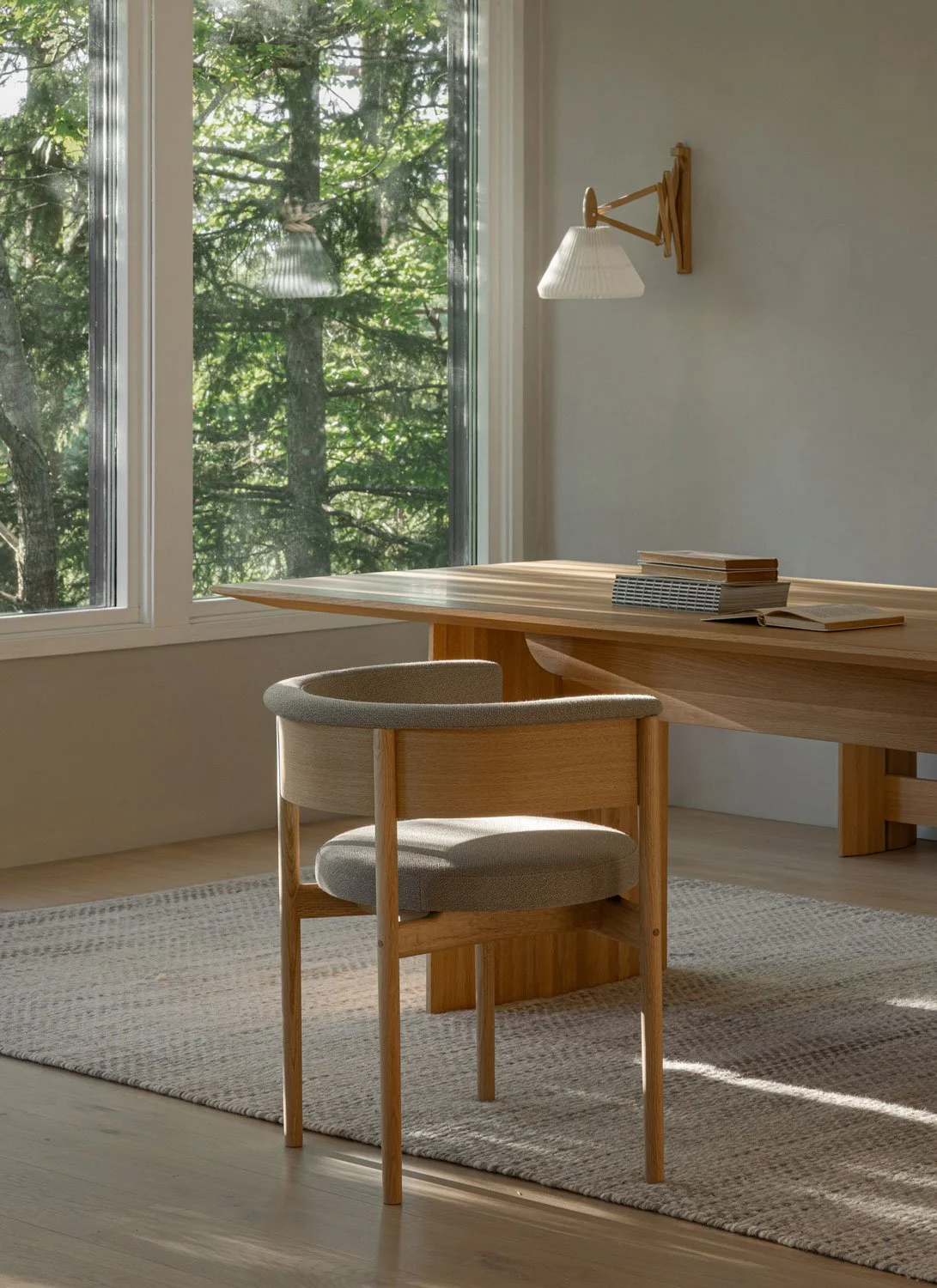
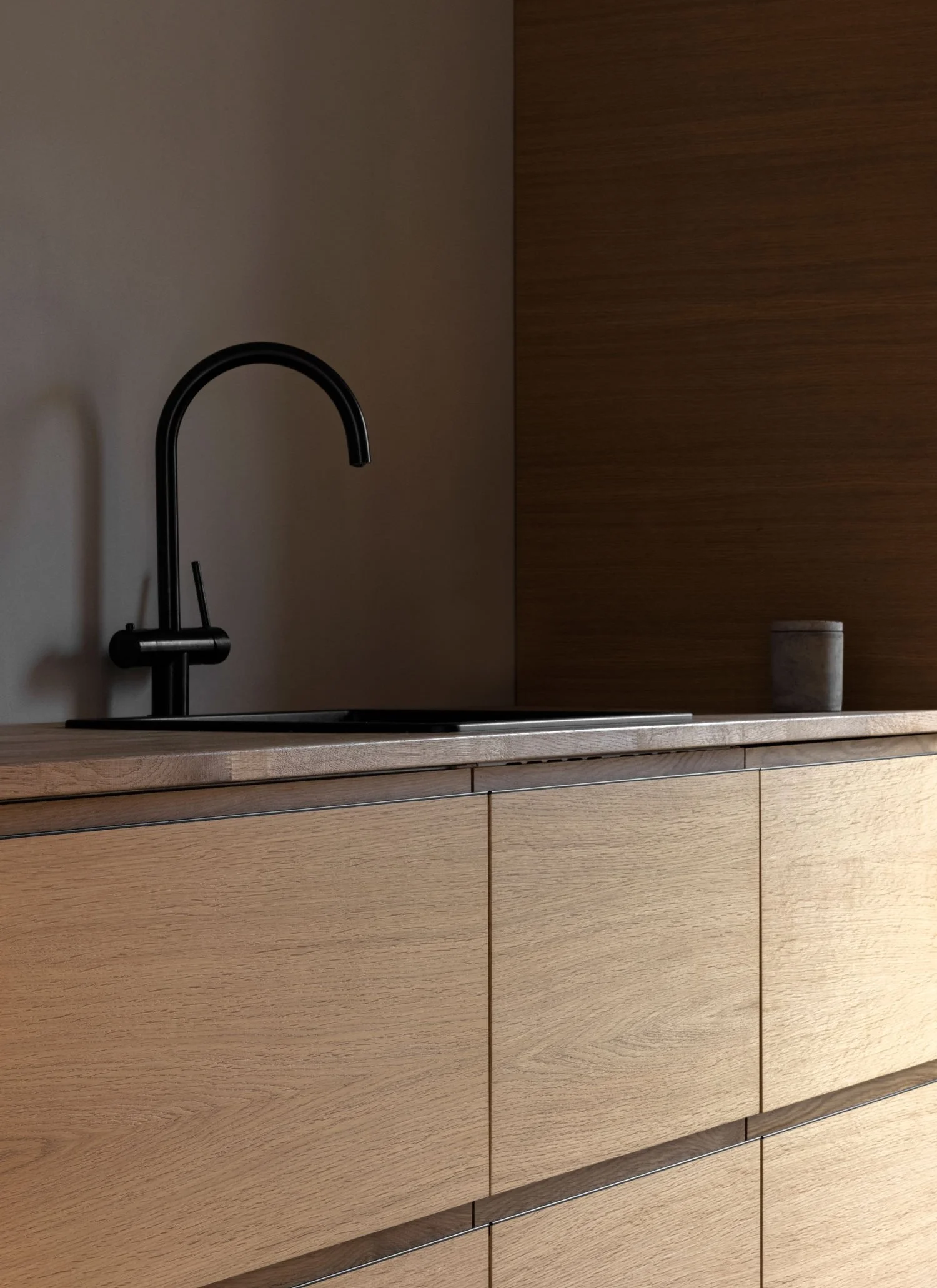
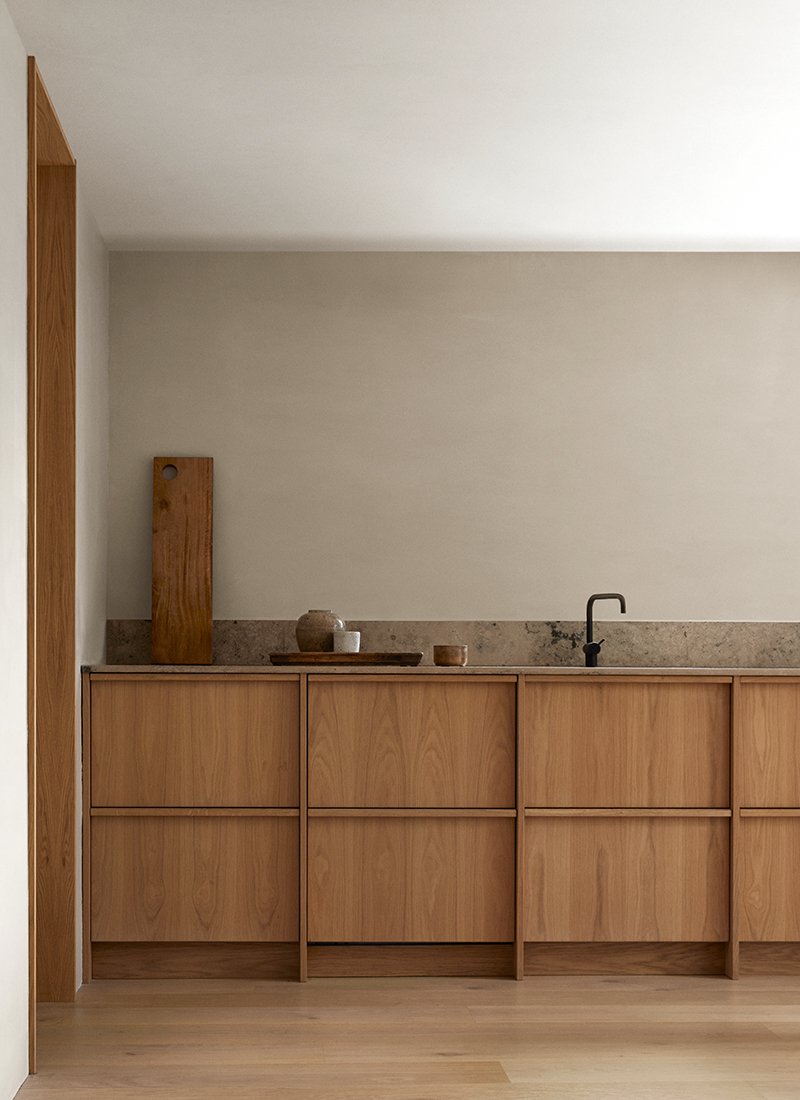
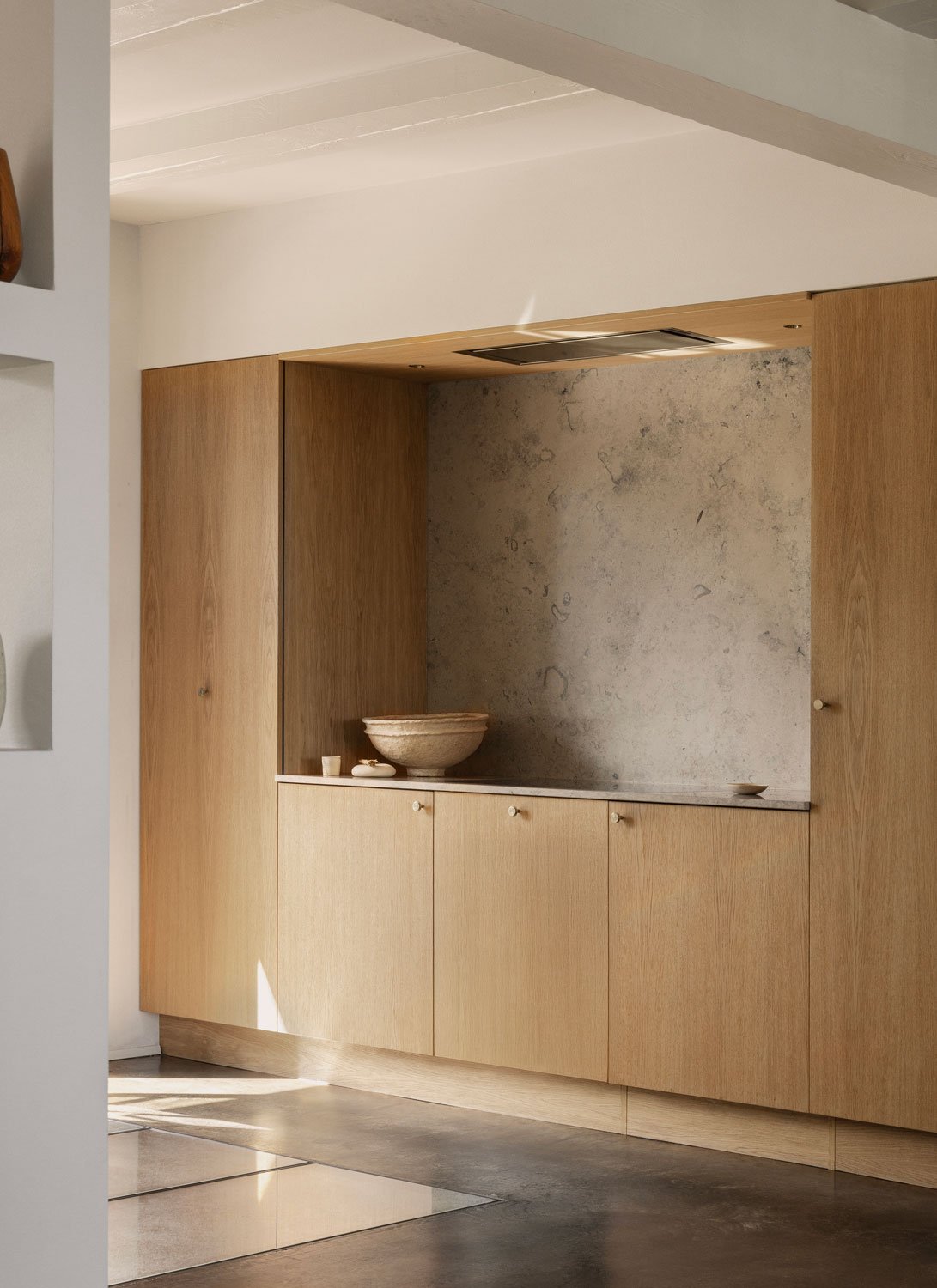
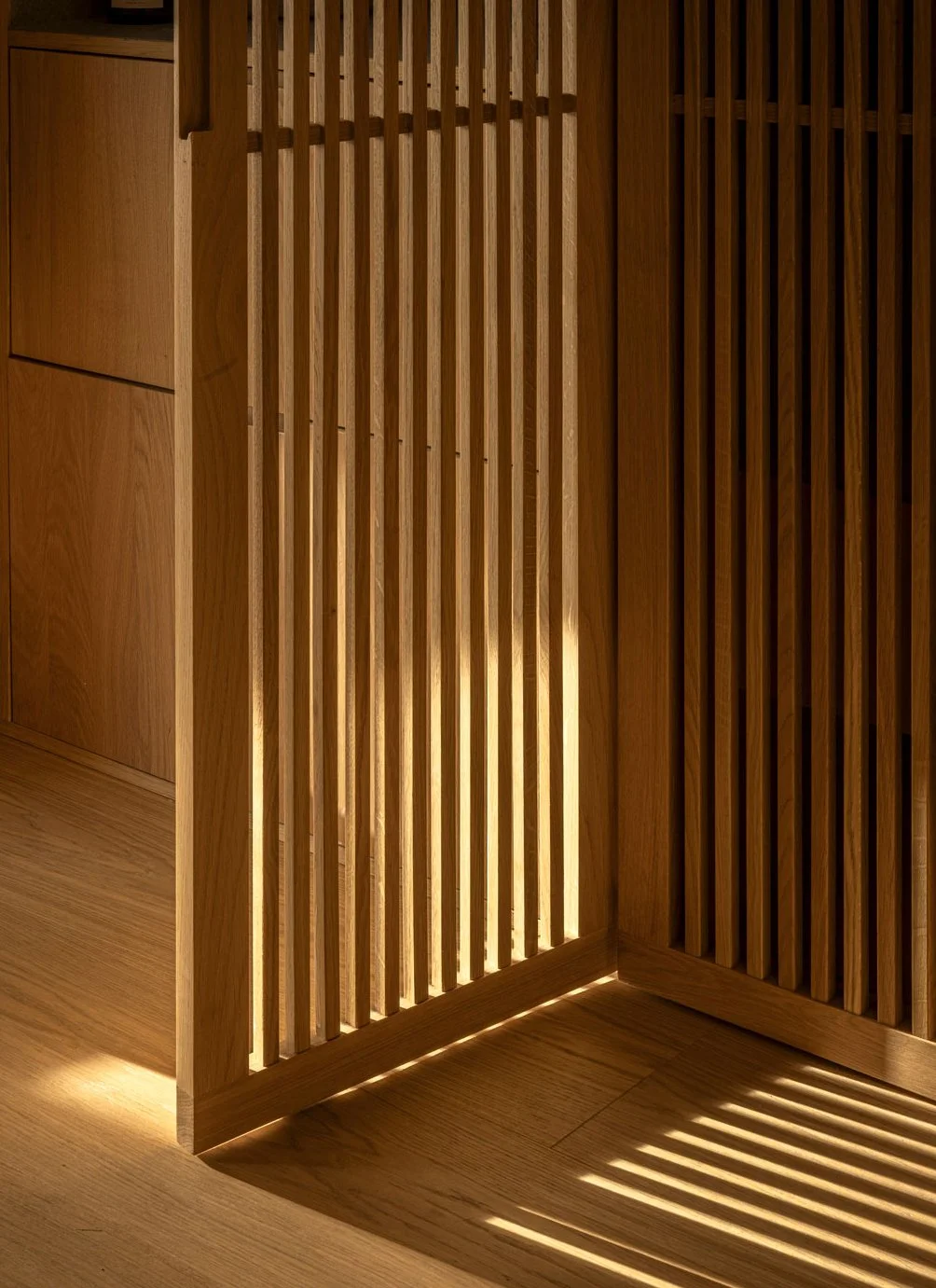
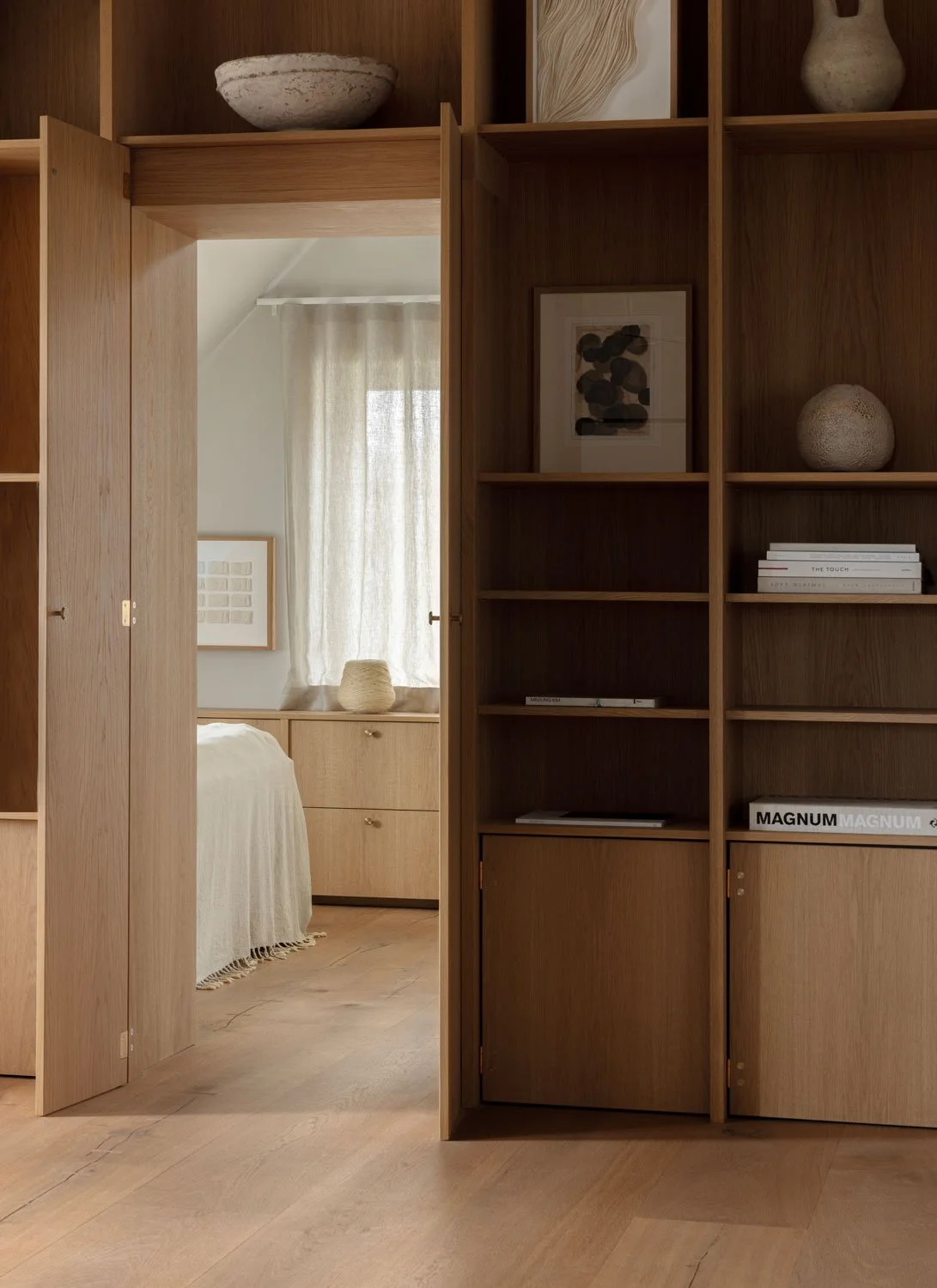
Japandi interiors are built from materials that show their age gracefully. Oak wood with visible grain, weathered linen, raw concrete, unglazed ceramics, natural leather that develops a patina. These aren't polished finishes fighting against time. They're materials chosen because they improve with age, because they tell a story of use and care.
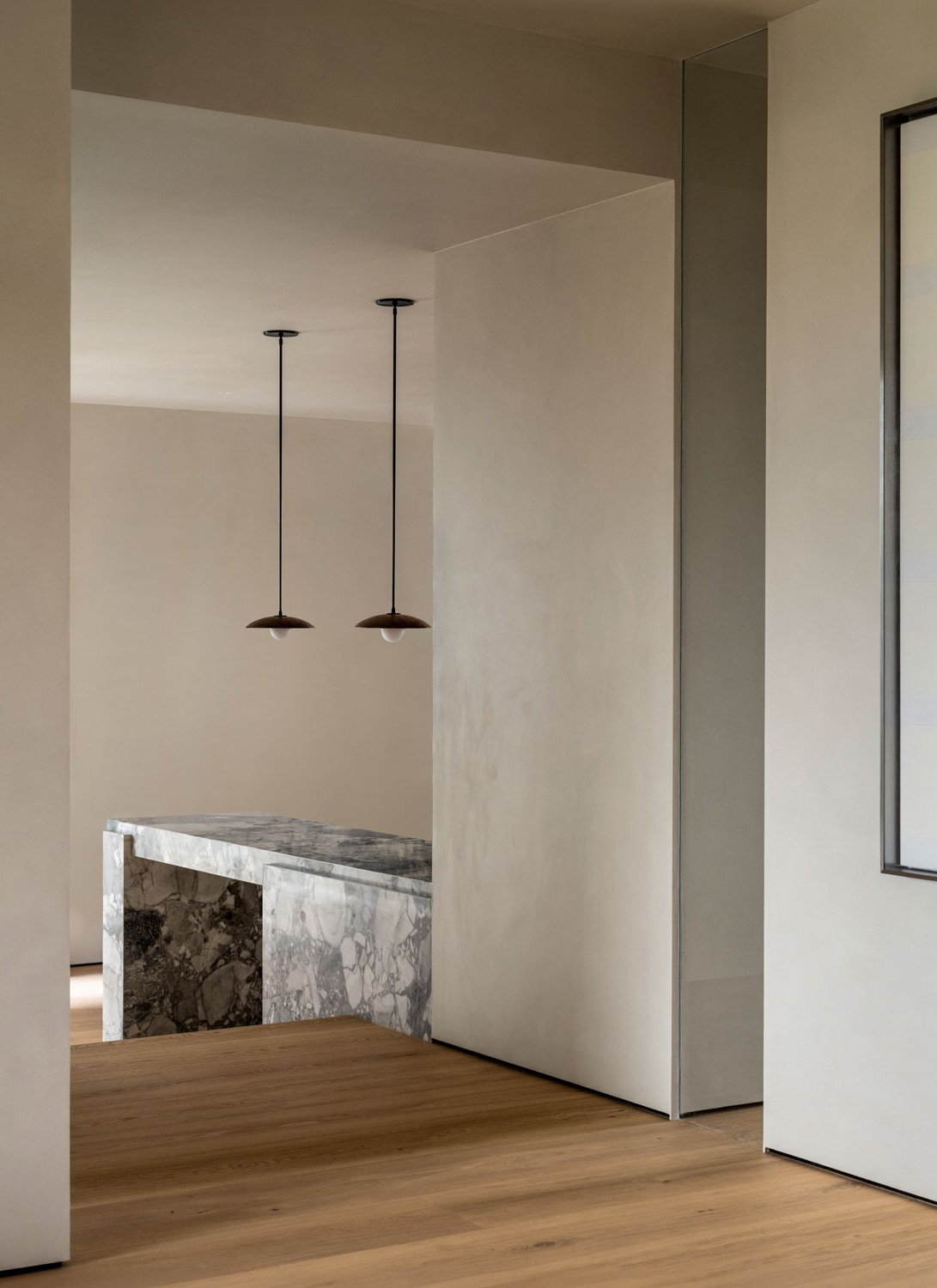
We see this in kitchen islands where oak remains unvarnished, developing its own subtle darkening over years. In bedrooms where flax linen softens with every wash. In living rooms where marble and stone are left honed rather than high-polished, capturing light in a more diffused, contemplative way.
Neutral, Grounded Palettes
The color story in Japandi design is restrained by intention, not by limitation. You'll find whites and creams, soft grays, warm beiges, and the occasional touch of deeper tone. Black appears rarely but powerfully. Warm woods provide color, as does the natural variation in stone. The palette breathes.
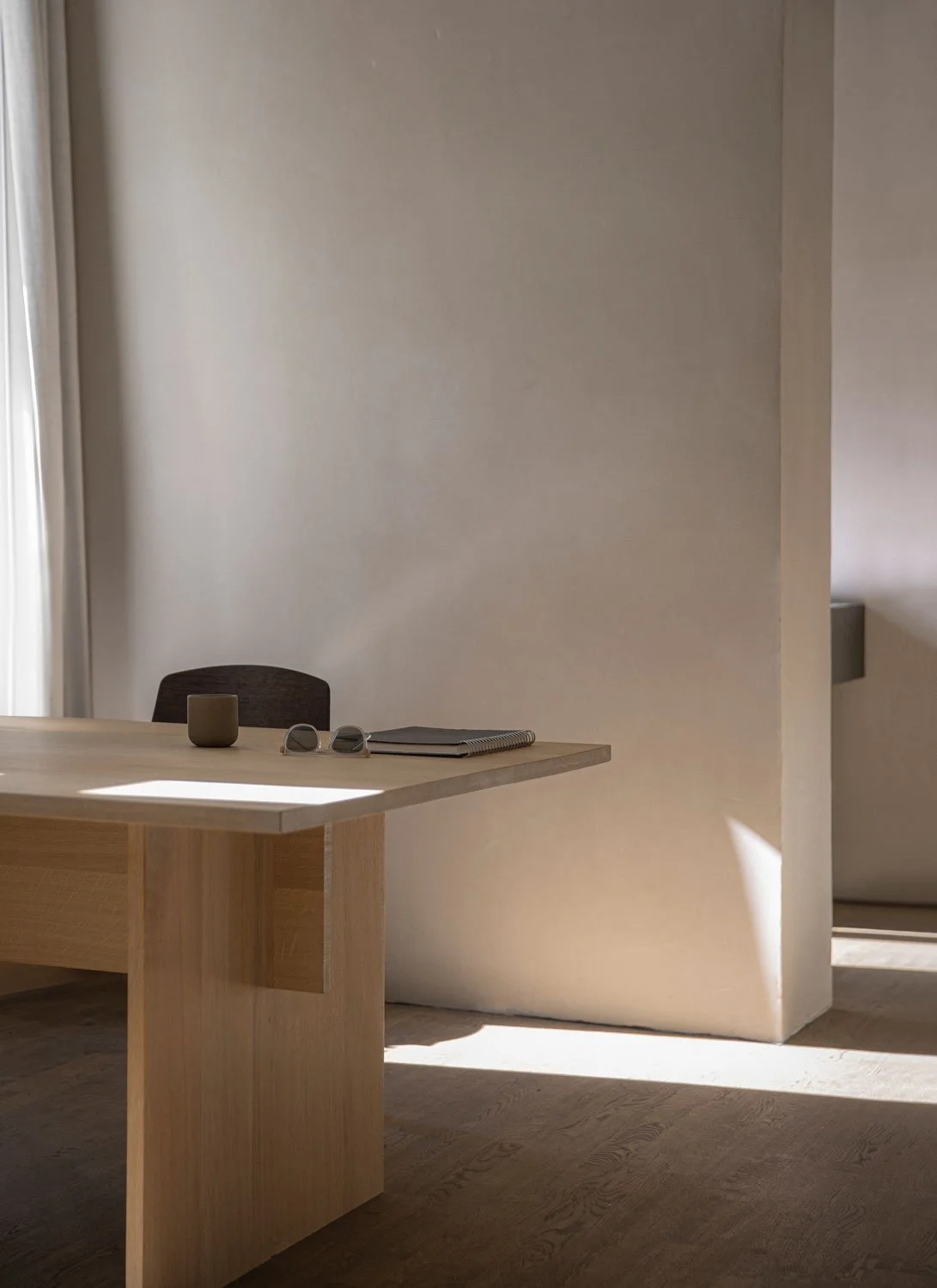
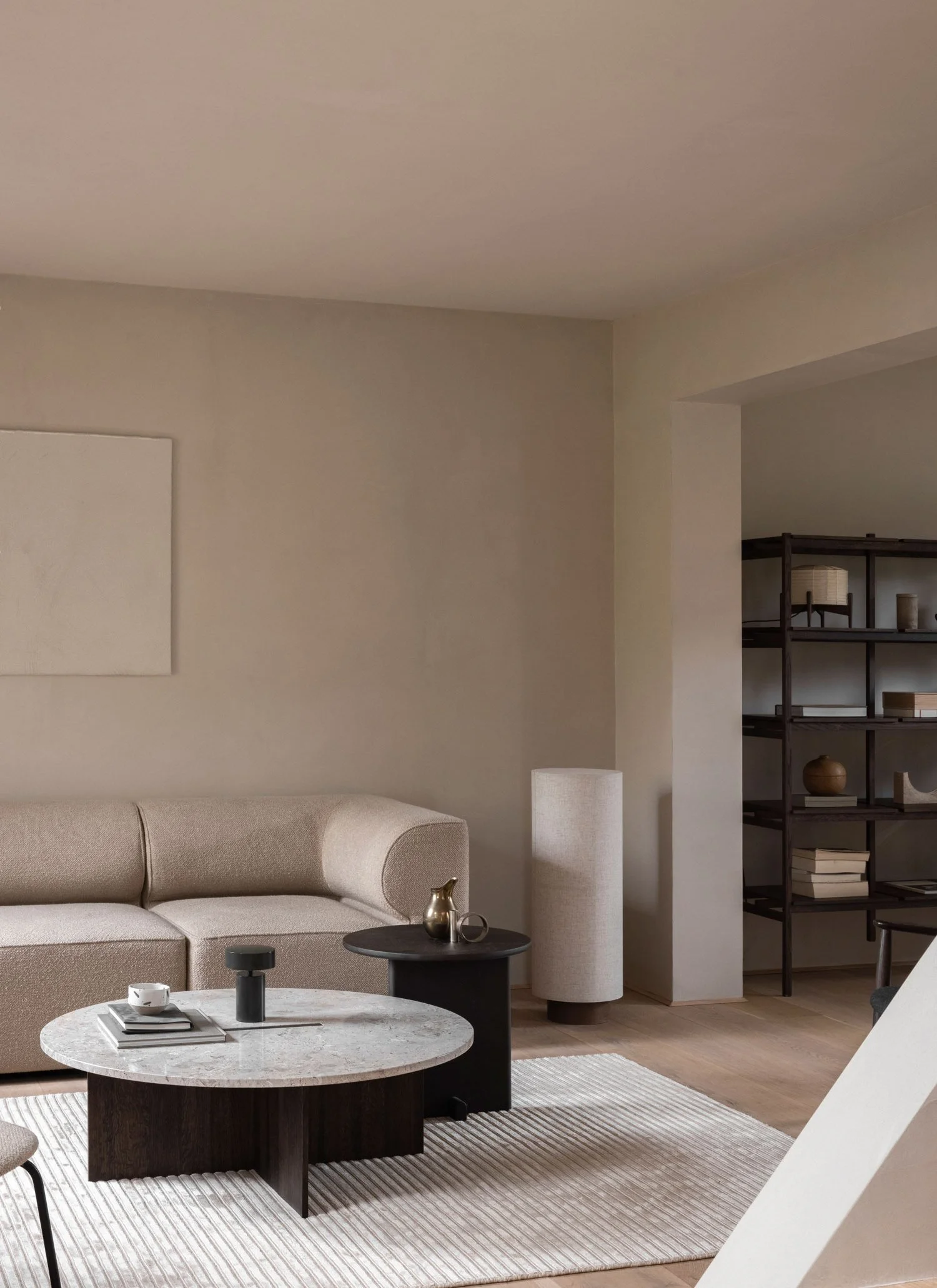
What distinguishes this from cold minimalism is warmth. There's cream, not clinical white. There's taupe and greige, not sterile gray. The neutrality feels natural because it's drawn from nature itself. Limewash walls carry subtle variation that white paint cannot replicate.
Clean Lines and Negative Space
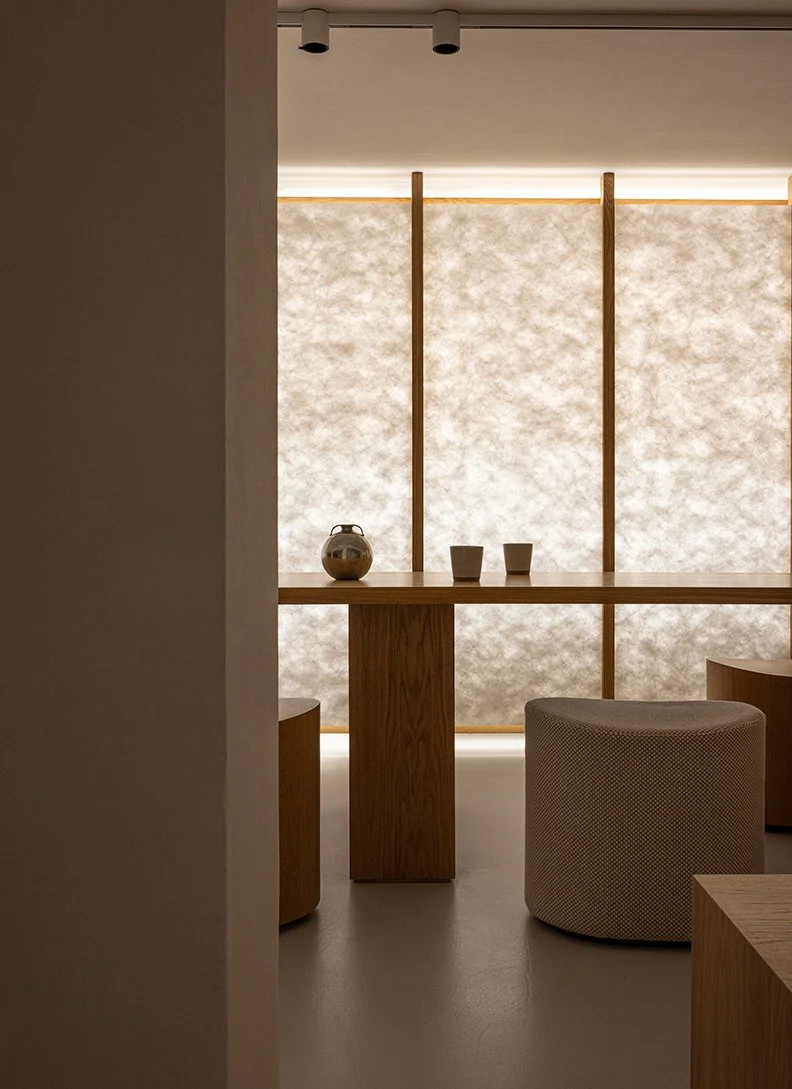
Japandi spaces don't compete for attention. Furniture sits low and horizontal. There are no ornamental details. A table is a table. A chair is fundamentally a place to sit. This clarity comes from Japanese design's respect for ma, the understanding that empty space is as important as filled space.
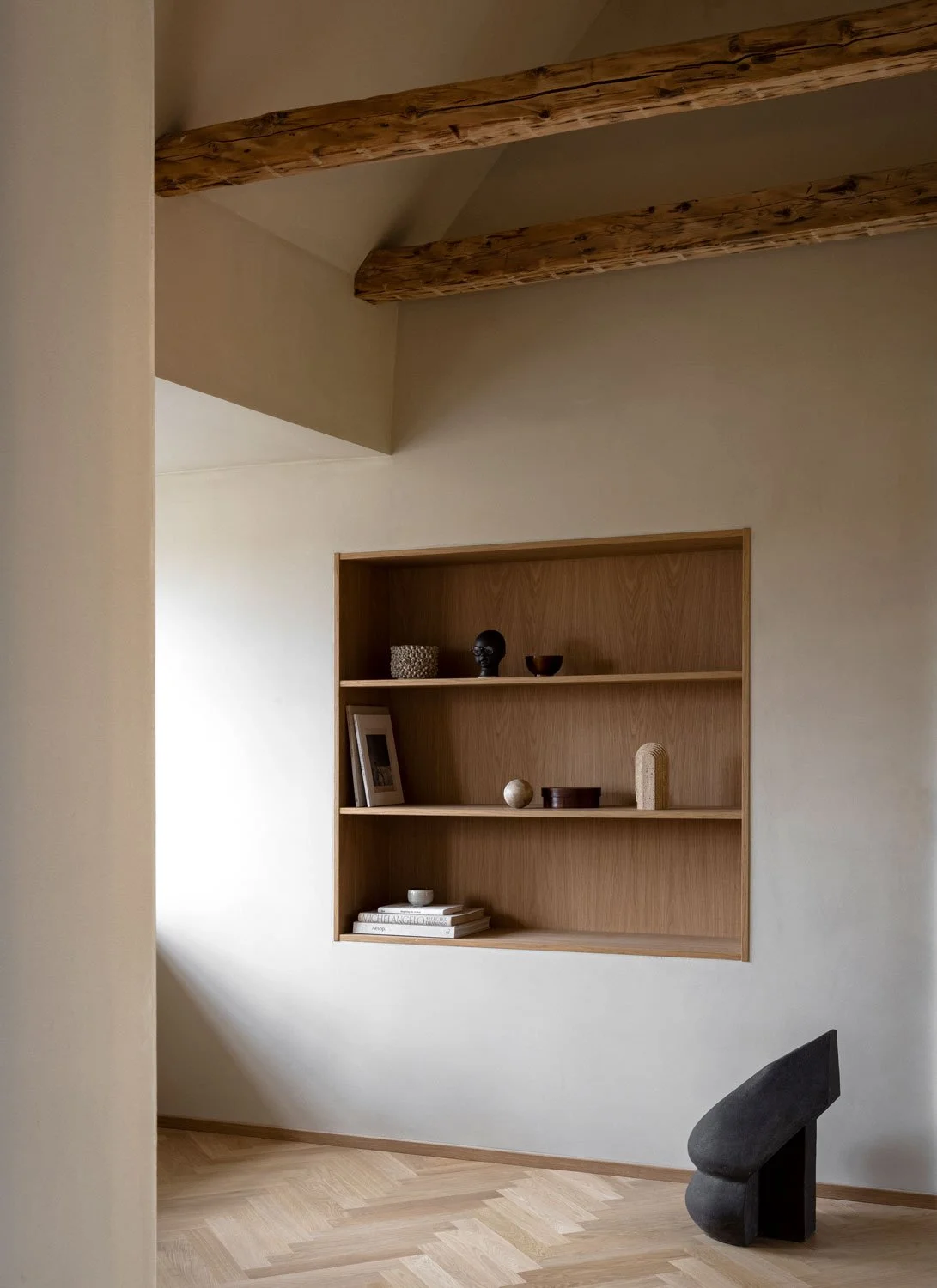
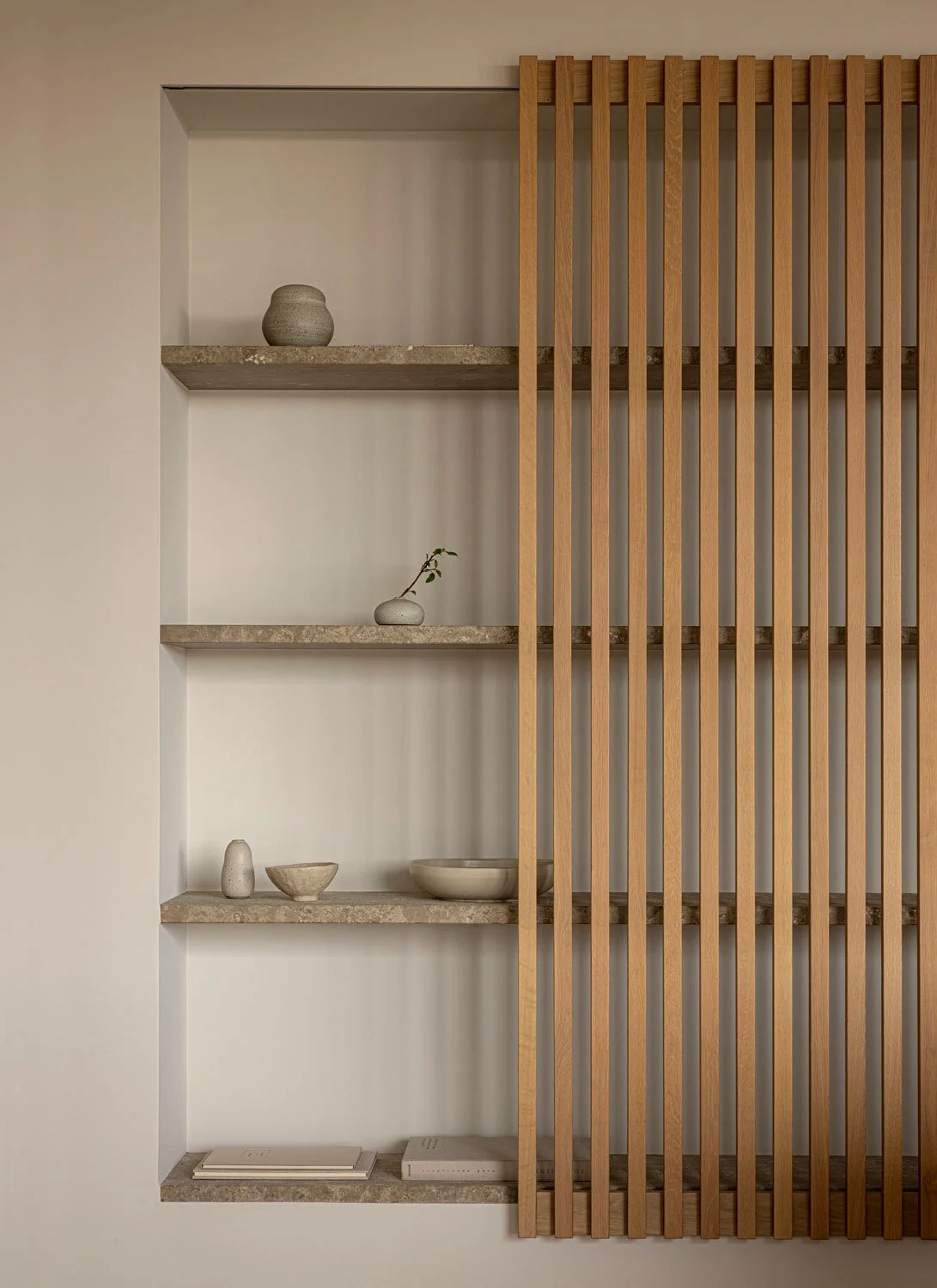
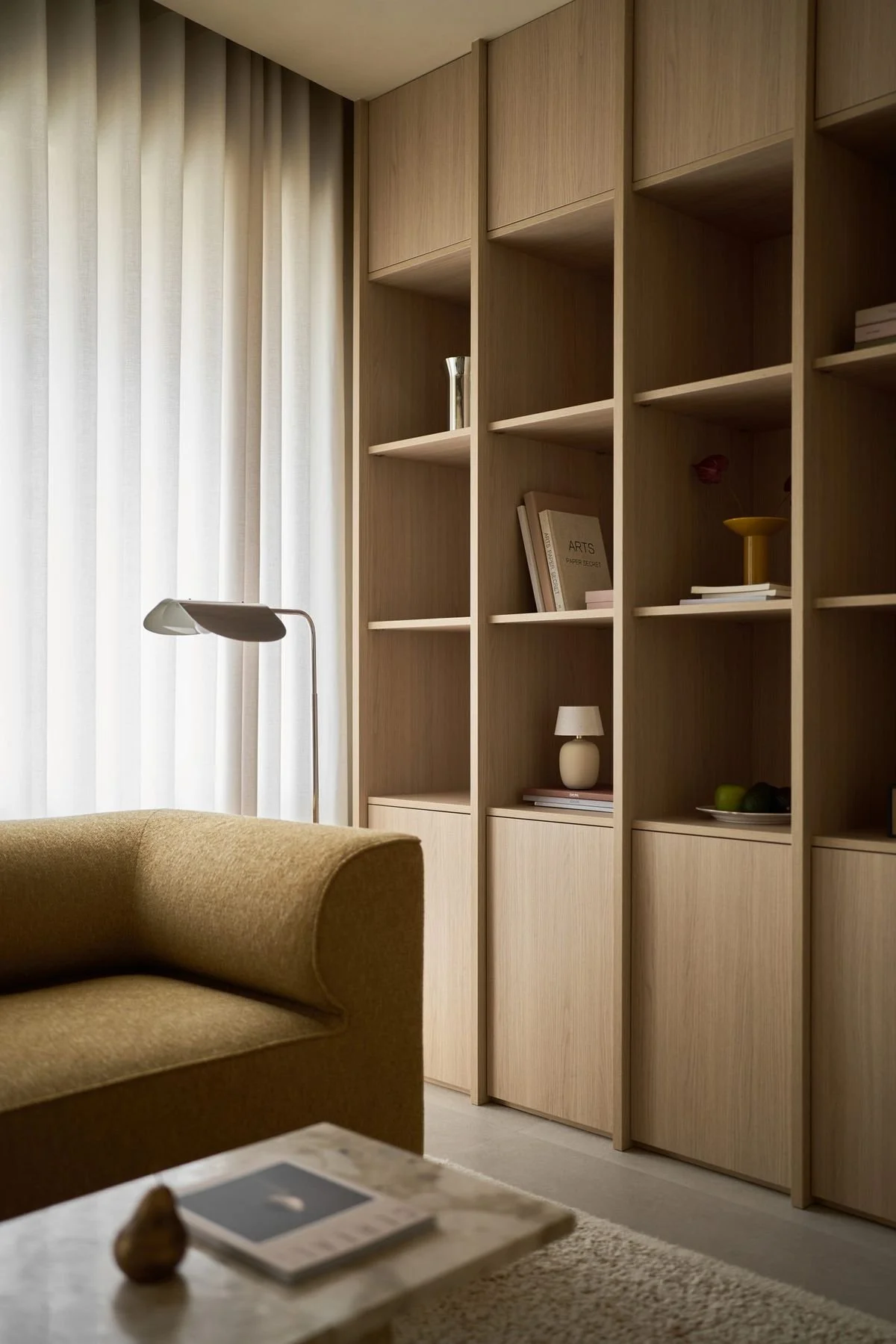
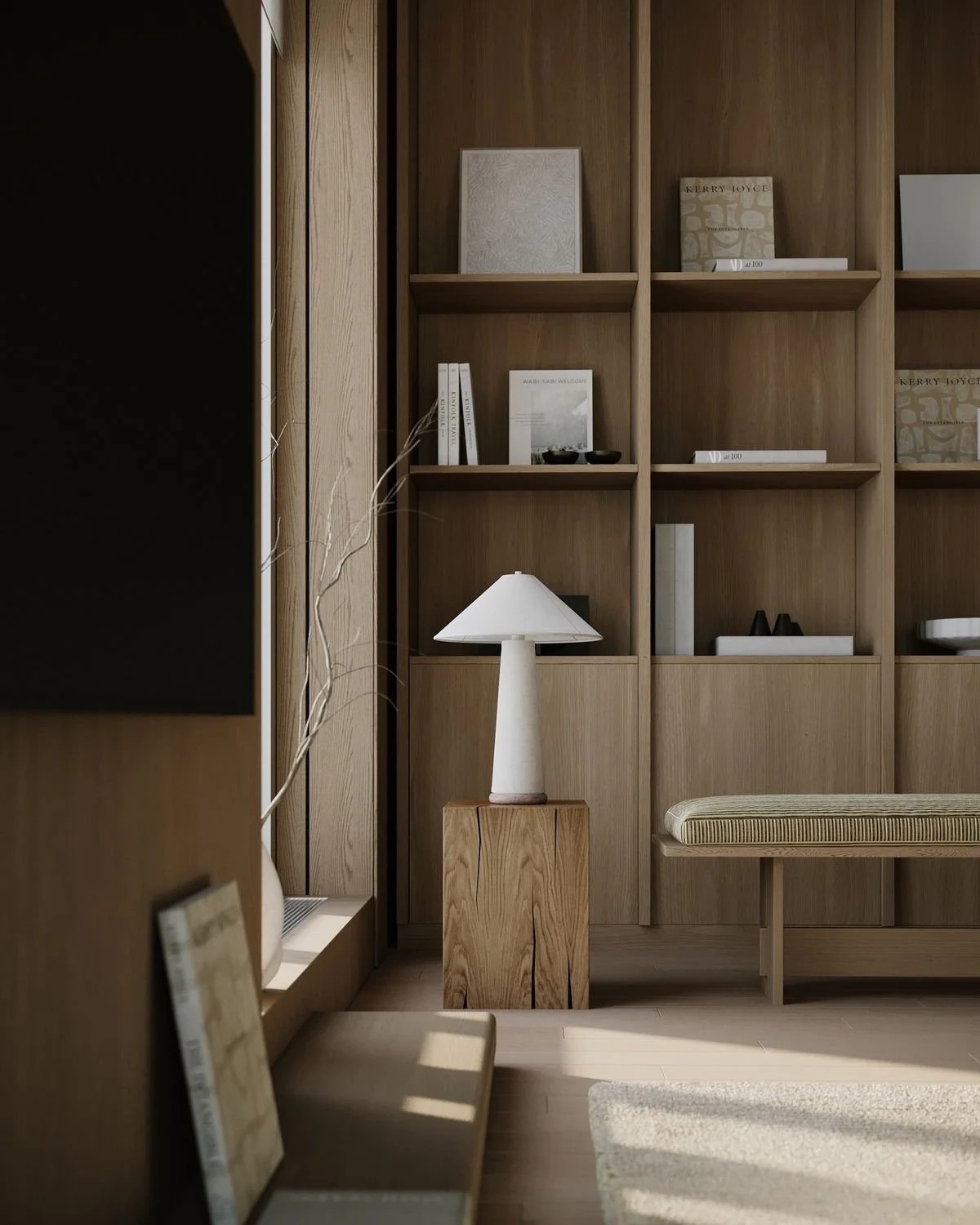
You notice this in how rooms feel uncluttered not because things are hidden away, but because fewer things occupy the space to begin with. A minimalist bookshelf becomes an art form. Storage solutions are thoughtful and concealed. The eye moves through a room with ease.
Texture as Storytelling
Japandi uses texture the way other styles use color. Woven textures, rough plaster, smooth stone, soft linen, warm wood. A room can be entirely neutral in its color palette yet rich in texture. This is how you create spaces that are calm without being cold, simple without being sparse.
Think of a living room with an oatmeal linen sofa, a chunky knit throw, raw wood shelving, a tactile area rug, and ceramic vessels. The eye finds interest in the interplay of surfaces rather than in competing colors or patterns.
Honest Craftsmanship
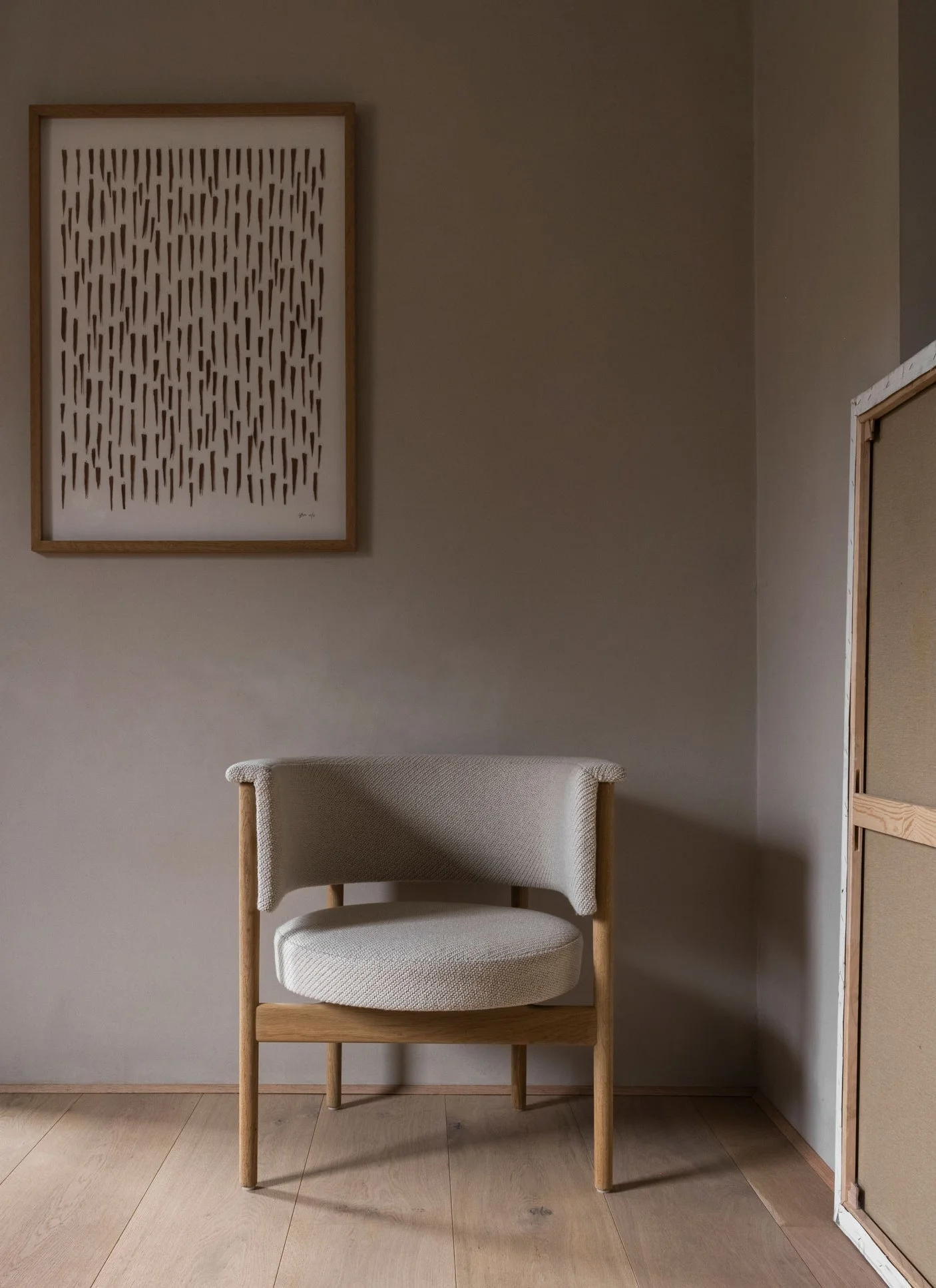
Both Japanese and Scandinavian traditions value visible craftsmanship. Joinery becomes design. You see the joints in wooden furniture because they're beautifully executed. Woven details are highlighted, not hidden. This honesty extends to the understanding that handmade objects carry slight imperfections, and these imperfections make them more beautiful.
A Japandi kitchen won't hide its structure behind cabinet doors that pretend the space is something it isn't. Instead, open shelving displays dishware and vessels that deserve to be seen. Floating shelves show their support systems. The design celebrates how things are actually built.
How Light Functions in Japandi Design
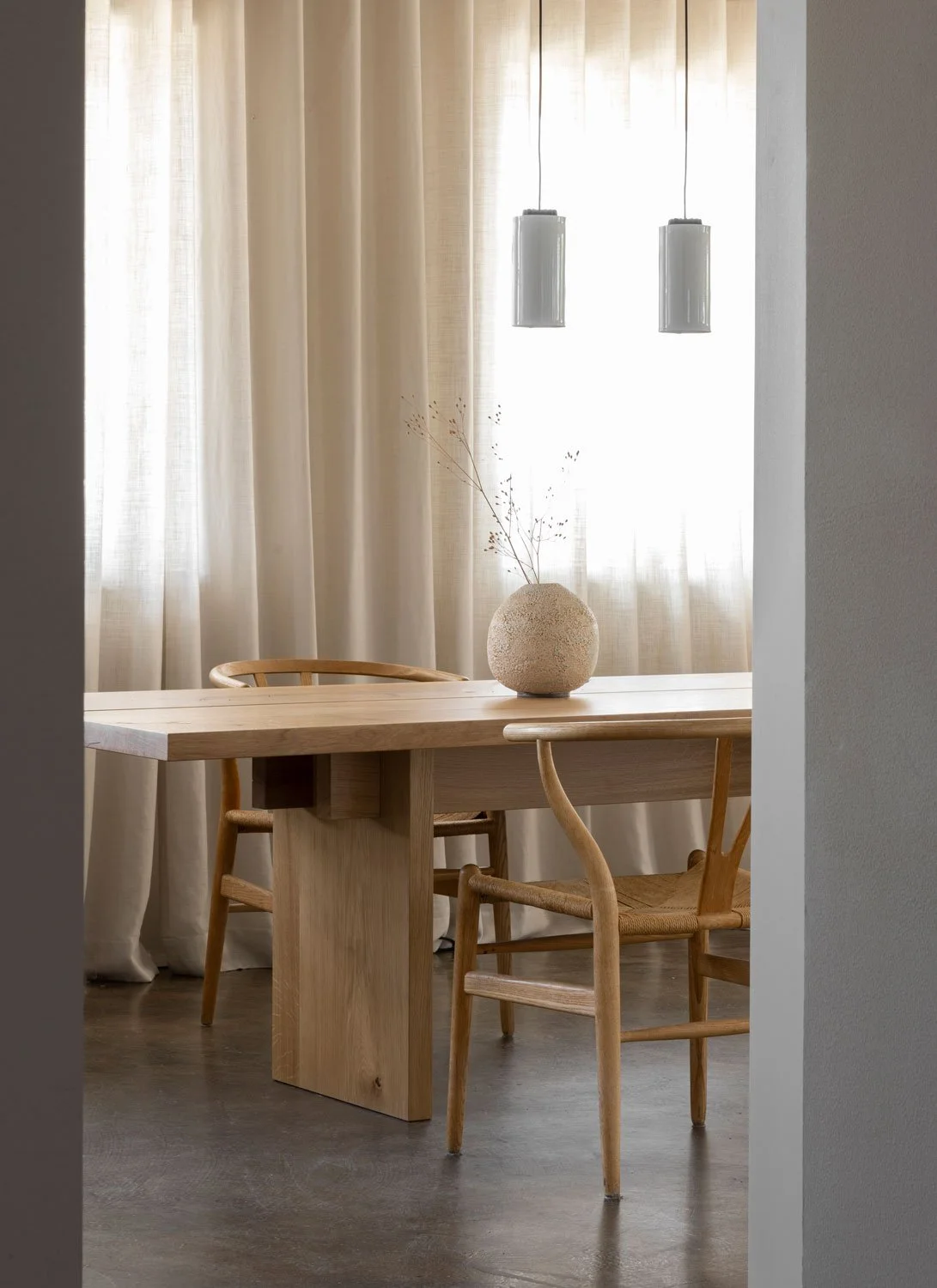
Light in Japandi spaces isn't controlled aggressively. Instead, it's allowed to move through the day. Windows are often left bare or dressed with sheer, natural fabrics like rice paper or raw linen. Artificial lighting is soft and diffused. Pendant lights in natural materials gently brighten work areas.
The limewash paint used throughout many Japandi interiors catches light differently than matte or glossy finishes. It creates a subtle, chalky quality that feels organic. Similarly, the unpolished finishes on marble and stone scatter light in a more contemplative way than high-gloss surfaces.
Japandi understands that how a space receives light shapes how we feel within it. The goal is never to maximize brightness but to create quality light that feels human and proportionate.
Bringing Japandi Into Your Home
The beauty of Japandi is that it doesn't require a complete renovation. It begins with understanding what to remove before considering what to add. Look at what you already have. Does it serve you honestly? Is it made from materials that age well? Does it leave room for breathing?
Start with surfaces. Consider limewash for walls. Choose light, natural wood finishes that will develop character rather than stain that masks the material. Let marble be marble, unpolished and honest.
For furniture, choose pieces with purpose. A wooden dining table that will gather your family for years. Chairs that are comfortable because of their form, not because of cushioning. Storage that works invisibly. Japanese and Scandinavian makers have been perfecting these forms for generations.
Fill the space with fewer, more considered objects. A ceramic vessel that you genuinely love. A wooden bowl. Textiles in natural fibers. Plants that bring life without complexity.
Why Japandi Resonates Now
We're reaching for Japandi design because we're reaching for calm in an increasingly complex world. There's a quiet wisdom in the idea that when a room is well designed, it stops asking for your attention and instead supports your life within it.
Japandi suggests that beautiful living isn't about accumulation or statement making. It's about creating an environment where you can think clearly, rest deeply, and feel held by something thoughtfully created.
It's design that whispers rather than shouts. And in these times, we're all learning to listen to whispers.