Letting Go: The Emotional Work Behind Minimalist Living
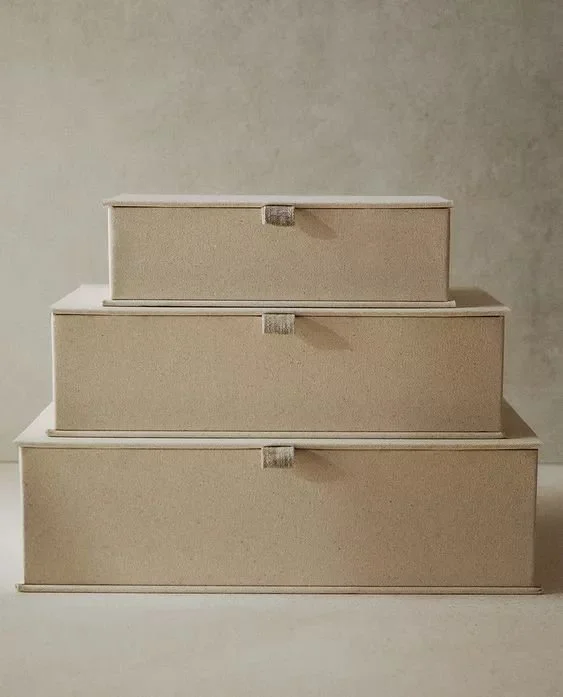
There is a box in my studio. I have moved it three times now. Inside are things I am not ready to throw away: a gift from someone I no longer speak to, a beautiful fabric bought for a project that never happened and a fragment of an earlier life I am not entirely sure I am allowed to release.
I think about this box often. Not because I need what is inside, but because it reminds me that minimalism is rarely about the objects themselves.
It is about what we are willing to let go of.
The Real Barrier Isn't Clutter: It's What the Clutter Means
Most advice about minimalism begins with the practical: sort, categorise, discard. But that approach often overlooks the part that actually prevents us from letting go.
Before we release something, we may need to grieve it. Every object carries a story.
Sometimes, it represents who we once believed we would become. I kept an expensive juicer because I was going to be the person who made fresh juice every morning.
Sometimes, it carries guilt. We keep a gift because giving it away feels like rejecting the person who chose it for us.
Sometimes, it holds hope. Perhaps one day those jeans will fit again. Perhaps the bread maker will finally be used. Perhaps the unfinished project will still become something.
Beneath all of this sits a deeper question:
If I let this go, what does that say about me?
When I began examining my own attachment to things, I realised that I was often keeping them as insurance against becoming someone I did not want to be. Releasing them meant accepting that certain versions of myself were already gone.
For a long time, that felt like failure. But it was not failure.
It was simply growth.
Permission to Grieve What You're Releasing
This is what I wish someone had told me sooner: letting go is a loss and loss deserves to be acknowledged.
You do not have to feel cheerful while decluttering. It does not have to become a productivity exercise or a ritual of instant transformation. You can simply recognise that you are saying goodbye to something that once mattered.
That goodbye is allowed to feel sad.
I kept a silk scarf for twelve years. I bought it after receiving my first bonus at work. I did not wear it. I barely looked at it. Yet I could not release it because it represented proof: that I had achieved something, that I had earned something beautiful, that the years of work had meant something. Letting it go felt like erasing that moment.
Eventually, I realised I did not need an object to validate my own history I earned that bonus. I lived that chapter. The scarf did not contain the achievement.
I did.
The release was not joyful. It was quiet and honest. Perhaps that is what remains inside the box in my studio: not objects I need, but versions of myself I have not yet fully said goodbye to.
The Questions That Actually Help
I have encountered many systems for deciding what should remain and what should leave. Over time, I have realised that practical questions are not always enough.
"Do I need this?" can keep us trapped in utility.
"Does this bring me joy?" may not account for the quiet, necessary things that do not inspire delight but still belong in our lives.
The questions that have helped me most are different.
Does this belong to who I am becoming, or who I was?
This changes the conversation. It is no longer about whether an object is objectively beautiful, valuable or useful. It is about whether it remains aligned with your life. A beautiful sweater may still need to leave if it no longer feels like you. Even if it was expensive. Even if it is perfect. Not everything beautiful is meant to remain with us forever.
Am I keeping this out of love or obligation?
Gifts, inherited objects and sentimental belongings often stay because we fear that releasing them would dishonour someone. But keeping something you do not want is not always an act of respect. Real respect may mean using it, appreciating it, passing it to someone who will value it, or releasing it with honesty.
If I needed this again, could I find or replace it?
This question dissolves much of the fear surrounding the future. We often store years of imagined emergencies inside our homes. But many things can be borrowed, sourced again or lived without. We do not need to make our homes carry every possible version of what might happen one day.
What am I afraid will happen if I let this go?
This is the most revealing question. Sit with it. The fear is rarely about the object. It may be about forgetting someone, wasting money, admitting a mistake, releasing an identity or accepting that a particular life did not unfold as imagined.
Once the fear is named, the object often becomes lighter.
Where I Am Now: A More Considered Life
I am in a different phase now. Not because I have achieved minimalism, because minimalism is not a destination, but because I have become more intentional about what I allow into my home.
For years, I decluttered reactively. I would accumulate, feel overwhelmed and then purge. It was exhausting.
Now, I try to ask the more difficult questions before something enters my life. I wait.
I allow the first impulse to pass and ask where the object will live, how often it will be used and whether it belongs to the life I am genuinely living. I have become more discerning about provenance, longevity and the quiet cost of things designed to be replaced. Most importantly, I try to remain honest about the difference between my real life and my imagined one.
There are still boxes of decorative objects in our attic from a previous home. Things I thought I would use again. Things I was not ready to leave behind. They remain in the dark, untouched. If I have not missed them in years, I probably never will.
That is the honest part: allowing certain things to belong to an old space without feeling obliged to carry them into the next one.
The shift from asking, "What can I remove?" to asking, "What deserves to enter?" has been profound.
My home feels lighter. Not simply because there is less in it, but because what remains has been considered.
Nothing arrived entirely by accident. Nothing is here solely because of guilt, obligation or the ghost of who I thought I might become.
There is freedom in that. A quiet confidence.
The Calm After Letting Go
When people speak about minimalism, they often focus on the aesthetic: clean lines, empty surfaces, softened light and calm rooms. Those things matter.
There is genuine peace in a space that is not overwhelmed by objects. But the deeper calm comes from alignment.
When what you own reflects who you actually are, you stop arguing with your own life.
You stop walking past things that make you feel guilty. You stop maintaining a collection of half-finished selves. You simply live.
The box in my studio is smaller now. I still have not opened it.
But I no longer feel attached to it in the same way, and perhaps that is the real shift. I can let it go when I am ready. It is not holding anything hostage.
That is what minimalism means to me.
Not the absence of things, but the freedom to live without carrying the weight of everything you once thought you might become.
The rest is just design.